Republished by Scitop Ltd. All rights belong to the original publisher; see Source below.
Digitally Printed Wallpaper Market to Reach USD 29.8 Billion by 2036, Expanding at 8.4% CAGR
The global Digitally Printed Wallpaper Market is projected to grow from USD 13.3 billion in 2026 to USD 29.8 billion by 2036, expanding at a 8.4% CAGR during the forecast period. Growth is being driven by rising demand for customized interior designs, room-specific artwork, controlled print quality, and flexible digital production across residential and commercial spaces.
According to Future Market Insights (FMI), residential consumers are expected to account for 43.0% of the market in 2026, while residential interiors are projected to lead applications with a 41.0% share. Digitally printed wallpaper enables customized murals and measured artwork without traditional printing plates or large minimum production runs. However, installation variability, inaccurate measurements, and uneven wall surfaces remain important challenges for market participants.
Quick Stats: Digitally Printed Wallpaper Market • Market Size (2026): USD 13.3 Billion • Market Size (2036): USD 29.8 Billion • CAGR (2026-2036): 8.4% • Fastest-Growing Country: Japan (10.9% CAGR) • Leading Product Type: Vinyl Wallpaper (36.0% share in 2026) • Leading Application: Residential Interiors (41.0% share in 2026) • Leading End User: Residential Consumers (43.0% share in 2026) • Leading Distribution Channel: Specialty Home Decor Stores (34.0% share in 2026) • Leading Printing Technology: Inkjet Printing (39.0% share in 2026) • Incremental Opportunity: USD 16.5 Billion
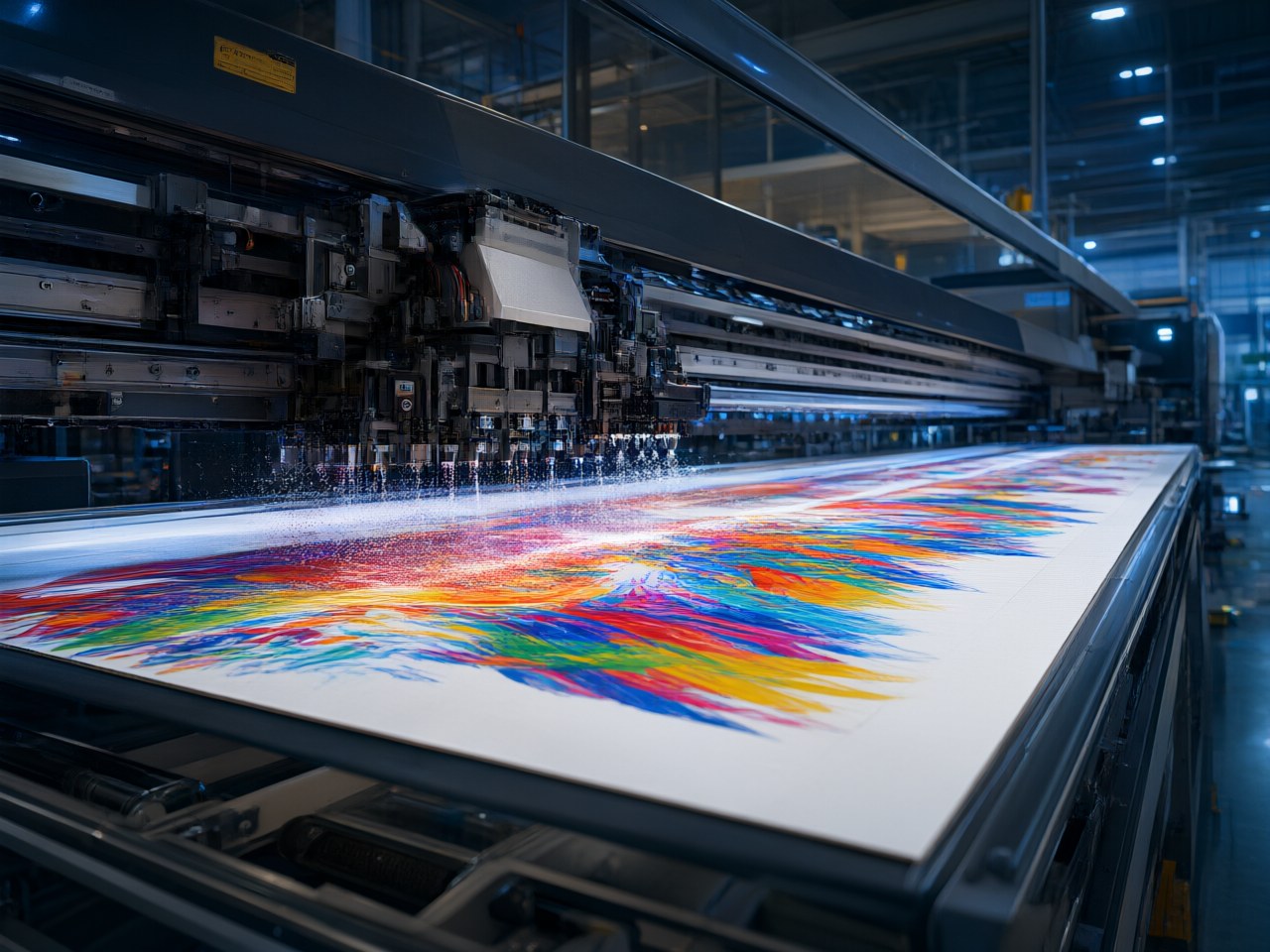
Market Overview Digitally printed wallpaper is gaining adoption as homeowners, interior designers, developers, and commercial property owners seek personalized wall treatments with flexible production quantities and controlled visual output. Digital printing allows manufacturers to create variable artwork without conventional printing plates, making it suitable for customized murals, renovation projects, and smaller production batches.
Professional installation is also becoming increasingly relevant to successful project execution. Houzz Research reported that 93.0% of participating United States homeowners planned to hire professional contractors for their 2026 interior renovations. Professional installers can improve measurement precision, panel sequencing, and completion quality across complex wallcovering projects.
Buyers are also paying greater attention to fire safety documentation, indoor-emission information, substrate performance, and installation requirements. These considerations are encouraging manufacturers to strengthen product documentation and technical support.
Growth Drivers Key factors supporting market expansion include • Rising demand for customized and personalized interior decoration. • Growing residential renovation and home-decorating activity. • Increasing use of room-specific murals and measured artwork. • Ability to produce customized designs without traditional printing plates. • Adoption of compact digital printing technologies.
Manufacturers are focusing on color consistency, substrate compatibility, panel matching, artwork management, and installation support to reduce errors and improve finished-room appearance.
Analyst Perspective Rahul Pandita, Principal Analyst at Future Market Insights, said "Digitally printed wallpaper creates commercial value through controlled customization and accurate room measurement across complete interior projects. Buyer teams examine panel matching and substrate performance during technical approval and final visual review. Sustained orders require validated materials plus installer support protecting the approved appearance across complete rooms."
Segment Analysis By Product Type Vinyl wallpaper is projected to lead the market with 36.0% share in 2026, supported by durability, established installation practices, and familiarity among residential and commercial buyers.
Non-woven and paper wallpapers remain relevant for projects requiring straightforward handling and familiar material choices. Fabric-backed wallpaper provides additional texture, while customized wallpaper serves projects requiring individually prepared artwork.
By Application Residential interiors are expected to account for 41.0% share in 2026, supported by personalized treatments across living rooms, bedrooms, home offices, and other frequently redesigned spaces.
Commercial spaces and hospitality applications provide additional opportunities through branded environments and coordinated interior concepts. Healthcare and educational facilities place greater emphasis on cleaning performance, material documentation, durability, and planned installation schedules.
By End User Residential consumers are forecast to hold 43.0% share in 2026, supported by homeowner interest in personalized murals and customized room themes. Purchasing decisions combine design preferences with installation costs, measurement accuracy, durability, and expected service life.
Commercial building owners, hospitality companies, interior designers, architects, and institutional buyers represent additional demand, particularly for multi-site renovation and specification-led projects.
By Distribution Channel Specialty home decor stores are projected to account for 34.0% share in 2026. Physical samples allow customers to evaluate color, texture, and substrate appearance while receiving design guidance and installer referrals.
Direct sales support customized projects, while online retail and building material distributors expand catalog access and regional delivery.
By Printing Technology Inkjet printing is estimated to lead with 39.0% share in 2026, supported by variable artwork, customized dimensions, and compact production batches.
Latex and UV printing address specialized media requirements, while electrophotographic and dye sublimation technologies serve selected compatible applications.
Country-Level Growth Comparison • Japan: 10.9% CAGR • United States: 10.6% CAGR • Brazil: 9.3% CAGR • Germany: 7.9% CAGR • Canada: 7.2% CAGR • Australia: 6.7% CAGR • United Kingdom: 6.0% CAGR
Japan and the United States represent the highest-growth markets, followed by Brazil. Germany and Canada form the middle growth group, while Australia and the United Kingdom occupy the lower end of the disclosed forecast range.
Japan's growth is supported by compact urban interiors and demand for precisely planned decorative surfaces. The United States benefits from renovation activity, established retail networks, and large-format printing capabilities. Brazil is supported by construction activity and customization demand, while Germany and Canada benefit from renovation and housing activity. Australia and the United Kingdom continue to present opportunities through residential decoration and professional installation channels.
Competitive Landscape Competition centers on print consistency, design depth, substrate performance, customization, technical documentation, distribution reach, and installation support.
Key Companies Profiled • A.S. Création Tapeten AG • York Wallcoverings • Muraspec • Flavor Paper • Graham & Brown • Grandeco Wallfashion Group • Arte International • Asian Paints • Sangetsu Corporation • Marburger Tapetenfabrik J. B. Schaefer GmbH & Co. KG
A.S. Création Tapeten AG and York Wallcoverings compete through established portfolios and distribution networks. Muraspec and Grandeco emphasize technical material support, while Flavor Paper and Graham & Brown focus on design-led and customized applications. Arte International, Asian Paints, Sangetsu Corporation, and Marburger Tapetenfabrik strengthen competition through regional distribution, product expertise, and interior-design support.
Future Outlook The Digitally Printed Wallpaper Market is expected to maintain strong growth through 2036 as customized interior design becomes increasingly important across residential, commercial, and hospitality projects.
Future opportunities are likely to center on personalized murals, advanced textured printing, sustainable substrates, improved color consistency, integrated measurement services, and digitally managed artwork approval.
For manufacturers, long-term competitiveness will depend on combining digital printing capabilities with accurate measurement, reliable substrates, consistent artwork reproduction, technical documentation, and professional installation support. Suppliers that successfully connect customization with dependable project execution are positioned to capture expanding demand across global interior markets.
Source
- openpr.com - Original article: Digitally Printed Wallpaper Market to Reach USD 29.8 Billion by 2036, Expanding at 8.4% CAGR