Republished by Scitop Ltd. All rights belong to the original publisher; see Source below.
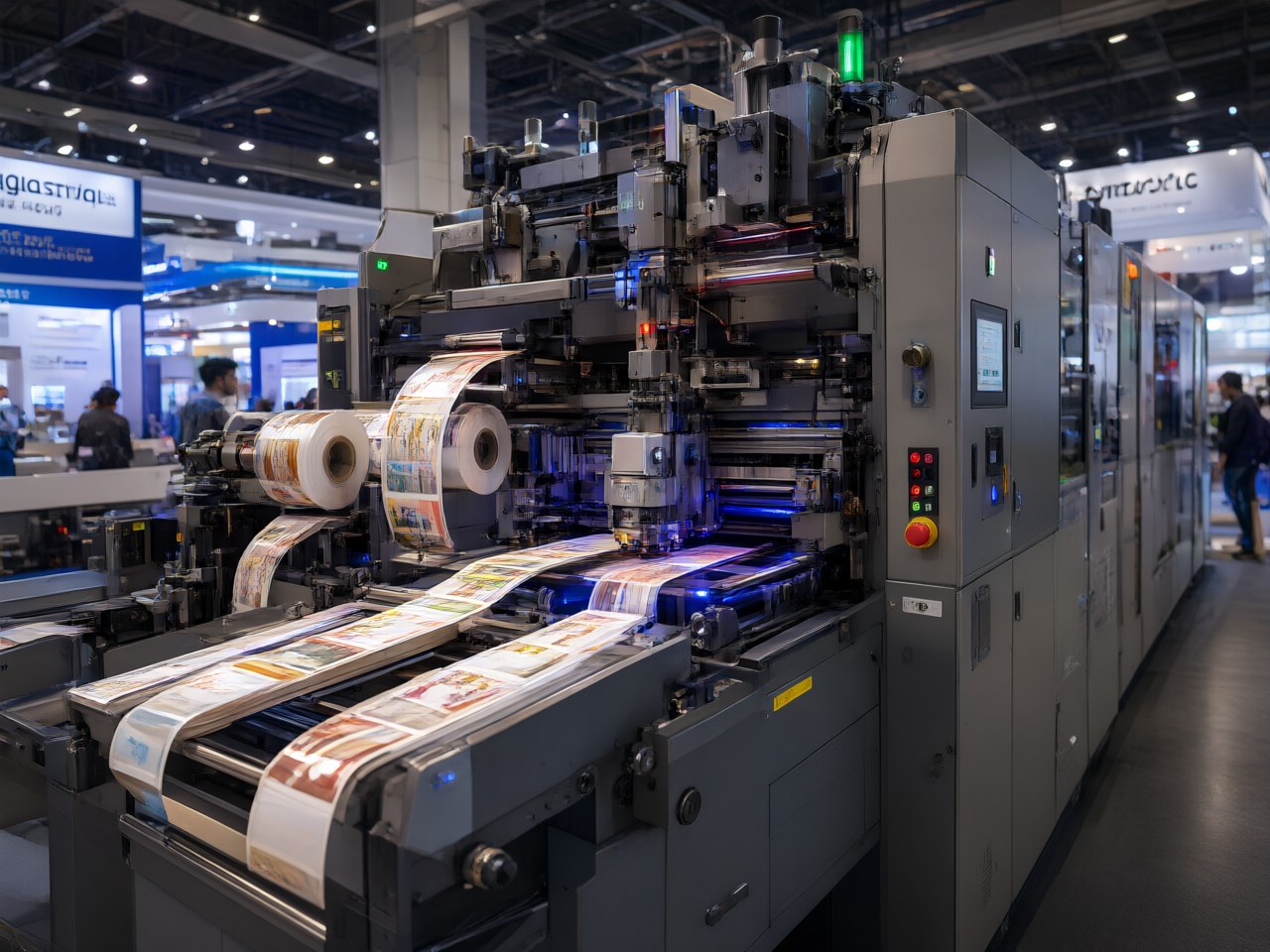
Printing Presses & Hybrid Technology Bobst featured its connected packaging production technologies, with live demonstrations of the Digital Master 340 hybrid label press. The modular system combines UV inkjet printing with flexographic, embellishment, and converting modules, enabling printing and finishing in a single pass. Featuring a 340mm (13.5″) print width, the press operates at speeds up to 328 fpm at 1,200 dpi, with four or six colors and optional digital white. Integrated quality control supports inline inspection and calibration. Bobst also highlighted Bobst Connect, its digital platform for production monitoring, workflow visibility, and data-driven decision-making. Canon U.S.A. showcased its expanding label and packaging portfolio, including the Edale LabelLine Series, marking a significant US trade show presence for Edale within the Canon organization. The modular platform integrates flexographic printing and converting to accommodate different applications and run lengths. Canon also demonstrated its Colorado M-series and several desktop label printing systems. An applications gallery featured labels, cartons, mailers and packaging graphics produced using technologies from across the Canon portfolio. The company also previewed the LabelStream LS2000 digital label press and corrPRESS iB17 packaging platform, both still under development at the time of the show. Dantex Group previewed Pico Adaptive Logic (PAL), an AI-powered operator support system scheduled for commercial introduction in early 2027. Integrated into the company’s PicoPilot and PicoCenta interfaces, PAL uses natural-language interaction to provide assistance with press operation, maintenance and troubleshooting. Developed with 42 Technology, the system draws on Dantex’s technical knowledge base and can alert operators to emerging production issues. Dantex also showcased its PicoJet 1200 DRS and PicoColour 254 digital presses. A GM DC350 finishing system demonstrated how the PicoColour 254 can be configured for integrated roll-to-hybrid production. Domino highlighted its digital inkjet printing and hybrid integration technologies, including the N610i-R retrofit module, K600i variable-data printer, and Sunrise digital front end. The N610i-R enables converters to add digital printing capabilities to existing flexographic presses, extending their usefulness for shorter runs and multiple-SKU applications. Domino also featured its collaboration with Mark Andy on the DSiQ-R hybrid module. Presentations addressed connected production workflows, automation and the growing importance of variable-data printing as brands prepare for broader adoption of next-generation 2D barcodes. Durst introduced its Tau G3 Peak UV inkjet press to the North American market. Demonstrated for the first time in the US, the press delivers 1,200 dpi resolution at speeds up to 382 fpm. It incorporates Durst ARC (Automatic Register Control) and MEP (Material Edge Protection) technologies to improve production consistency and reduce operator intervention. Durst also featured its KJet hybrid printing platform, combining digital and conventional printing capabilities. Complementing the equipment were Durst Workflow Label and Durst Analytics software for production automation, workflow connectivity and performance monitoring. Edale, a Canon company, highlighted its flexographic printing technologies, emphasizing automation, faster changeovers and expanded production capabilities. A central focus was the FL4p label press, engineered for consistent print quality and improved productivity through servo-driven automation. The company also featured the FL4e, designed as an accessible entry point into flexo printing, and the FL6p, a fully servo-driven folding carton press capable of incorporating inline embellishment. Edale emphasized reducing setup time, material waste and operator intervention while expanding its North American and Latin American presence through the Canon organization. Flint Group Digital Xeikon showcased three digital label printing solutions: the TX500, PX3300HD, and subscription-based Ecolyne press. The TX500 uses TITON toner technology, offering resistance to heat, solvents, and scratches without requiring varnish, while the PX3300HD provides 1,200 dpi UV inkjet printing. Ecolyne offers a subscription model designed to make digital production more accessible. Xeikon also demonstrated inline digital embellishment through a collaboration with Kurz, combining the TX500 with the Kurz R520 for metallic decoration in a single pass. The company also participated in The Label Trail, highlighting connected production and workflow automation. Heidelberg and Gallus emphasized flexible, scalable production under the theme “Let’s Connect.” Central to the exhibit was Gallus’ System to Compose concept, which allows converters to configure printing and converting equipment around specific applications and production requirements. An interactive machine configurator enabled visitors to explore equipment combinations and workflows. The booth also highlighted the Gallus Five platform and Gallus Screeny screen printing technology for premium label applications. Heidelberg and Gallus emphasized how modular equipment configurations and connected production systems can help converters respond to changing job requirements while maintaining efficiency. HP demonstrated the HP Indigo 6K+ and Indigo 200K digital presses alongside integrated finishing technologies, highlighting applications in labels and flexible packaging. The company celebrated sales of more than 200 Indigo 6K+ presses since the model’s introduction at Labelexpo Europe 2025, naming Brightline Label and Packaging as its 200th customer. The HP Indigo 200K illustrated opportunities for short-run and on-demand flexible packaging production. HP also presented an interactive 3D experience featuring the HP Indigo V12, which uses LEPx technology to achieve speeds up to 400 fpm. Additional presentations focused on AI, workflow automation, and HP Industrial Print software. Konica Minolta presented the AccurioLabel 231, featuring automated print monitoring, extended maintenance intervals and improvements designed to increase engine life. The toner-based digital press operates at speeds approaching 77 fpm and delivers 1,200 x 2,400 dpi resolution. The company also demonstrated the AccurioLabel 400, which offers optional white toner for applications involving transparent and metallic substrates. Complementing the presses was the JETvarnish 3D Web 400, enabling converters to add raised spot UV, hot foil and variable-data embellishments for premium labels. Mark Andy demonstrated its Performance Series S9 flexo press, offering web widths up to 26″ and speeds up to 1,000 fpm. The platform incorporates automation and sleeve tooling for pressure sensitive labels, shrink sleeves, unsupported films and light cartons. The company also featured its HighSpeed 1200 digital hybrid press, capable of speeds up to 480 fpm, with variable-data printing, high-opacity white and inline converting options. Additional highlights included the Rotoflex VLI-440 inspection rewinder and SupplySmart consumables management system. Mark Andy also introduced its MAPP Color Smart Program, combining press fingerprinting, calibration, and standardized operating procedures to improve color consistency. Nilpeter partnered with Kurz and several industry suppliers to demonstrate an integrated premium label production workflow, from initial design through printing, embellishment, and finishing. Central to the live demonstrations was the Nilpeter FA-17 flexo press, showcasing the registration accuracy and stability required for high-quality decoration. Working alongside Kurz, Nilpeter demonstrated how flexographic printing can be combined with registered foil and other embellishment technologies. Participating suppliers included Hinderer + Mühlich, Pantec, Wilson Manufacturing, RotoMetrics, ACTEGA, Avery Dennison, and UPM Adhesive Materials. Omet highlighted its label and flexible packaging print technologies, focusing on automation and customized press configurations. Representatives discussed the recently introduced KFlex K6, designed to improve productivity, print quality, and ease of operation. The company also presented the XFlex X7, a highly automated mid-web platform developed for premium shrink sleeves and flexible packaging applications. Combining flexo printing with rotogravure technology, the XFlex X7 supports specialty effects and a broader range of packaging constructions. Omet emphasized its “Combination 4 Success” philosophy, which allows multiple printing processes to be integrated into a customized platform. Rotocon made its North American debut, introducing Rotocon USA to provide regional sales, service and technical support. A live production line featured a nonstop unwind and butt splicer feeding the 17″, 8-color RFP C-Series flexo press, followed by a nonstop turret rewinder. The configuration demonstrated continuous production from unwinding through finished rolls, reducing interruptions associated with roll changes. Rotocon also displayed slitting and rewinding equipment, highlighting its expanding portfolio of printing and converting technologies for label producers.
Tooling, Finishing, Converting, and Embellishment A B Graphic International (ABG) showcased 14 machines and systems, marking its largest exhibition presence to date. A centerpiece was the debut of ABG FlexPack, a new range of flexible packaging converting solutions highlighted by the Galaxy GS20 Plus with PouchJet for short-run and value-added packaging. ABG also demonstrated an RFID converting line featuring NSU and Vectra technologies, with optional Tamarack dry tag insertion. Another highlight was the North American debut of DigiLase Duo, offering laser cutting, creasing and perforating without conventional tooling. A wine-label Digicon demonstrated premium embellishment capabilities, while additional equipment addressed inspection, slitting, and finishing. Ashe Converting Equipment demonstrated its 65″ Diamond duplex slitter, the widest slitter the company has exhibited at the event. The fully servo-driven machine incorporates differential rewinding technology and accommodates substrates at widths ranging from 16″ to 65″. Designed for labelstock manufacturers, flexible packaging converters, and printers expanding into wider-web applications, the Diamond allows companies to slit rolls in-house to meet specific production requirements. Ashe also showcased its Opal glueless turret slitter-rewinder, a four-spindle narrow-web system featuring Autoset technology for automated setup. The Opal can operate inline or as a standalone finishing system. Cartes demonstrated three operational production lines featuring digital embellishment, laser diecutting, and integrated finishing. The GEMINI GE363WJ2R incorporated JET D-SCREEN technology with two independent printbars capable of applying different digital varnishes in one pass. This enables spot varnishing and Digital Metallic Doming effects while maintaining registration. Another line combined flexo printing, hot foil stamping, conventional screen printing and semi-rotary diecutting. A third demonstrated Cartes’ patented Invisible Laser Cutting technology, designed to eliminate the white edges commonly associated with laser cutting dark-colored labels. ETI Converting Equipment highlighted its Cohesio inline coating and converting system and LinerO linerless label platform. Through production videos and samples, ETI demonstrated technologies involving hot-melt adhesives, UV-curable acrylics, water-based emulsions, and silicone release coatings. Applications included decorative and custom-shaped linerless labels, wrap-around constructions, opaque materials, and patterned adhesive coatings. The company also presented a complete linerless production workflow, from material manufacturing through automated label application. ETI emphasized how integrated coating and converting can help converters bring additional processes in-house and gain greater control over material specifications. Grafisk Maskinfabrik (GM) showcased modular finishing and converting equipment designed for production flexibility and automation. Highlights included the DC350Flex equipped with laser diecutting for sticker production, the high-speed DC350Flex Basic, and the compact DC350Mini paired with an RS350 sheeter. The company also demonstrated its RD350 RFID converting system for smart labels and connected packaging. For premium applications, GM featured the HF350 hot foil and embellishment unit, while the CC160 converting system rounded out its equipment lineup. The portfolio addressed applications ranging from digital label finishing to RFID production and specialty decoration. Kocher+Beck featured its GapMaster EM electronic adjustable anvil system, incorporating servo-driven adjustment, digital input and haptic feedback for precise diecutting control. The system allows operators to make controlled adjustments to the cutting gap, supporting consistent results across different materials. The company also demonstrated its KMS Pressure Gauge System, including a motorized version with integrated sensors. Additional highlights included flexible dies, magnetic cylinders, print cylinders, and TecScreen printing plates, emphasizing tooling solutions for increasingly demanding label constructions. KTI, a Quantum Design product line, showcased its MTR Series four-spindle turret rewinder with automated core loading and roll closure systems. The core-loading technology accommodates sizes from 0.75″ to 3″, helping reduce manual handling during roll changes. Integrated print-and-apply technology allows finished rolls to receive labels containing job information, production dates and barcodes. The system is designed to improve short-roll production efficiency and reduce operator involvement in repetitive finishing tasks. Kurz showcased its decorative and embellishment technologies through live label production in collaboration with Nilpeter, Pantec and other suppliers. Demonstrations illustrated how hot stamping and cold transfer technologies can be incorporated into modern printing and converting workflows to produce metallic and decorative effects. The company also highlighted its digital design and visualization capabilities, connecting initial design concepts with production planning and finished label output. The collaborative demonstrations emphasized the importance of coordinated materials, tooling and equipment in premium label manufacturing. LemuGroup presented three live demonstrations covering digital embellishment, automated finishing, and RFID converting. The MI 350 Inkjet Digital produced raised varnish effects and Braille markings, illustrating opportunities for tactile and specialty labels. The modular BOSS finishing line operated with a GTU-26 glueless turret rewinder capable of speeds up to 820 fpm. The RDX RFID Inserter demonstrated inlay insertion, programming, verification and editing in a single pass, supporting growing demand for smart labels and connected packaging. Martin Automatic demonstrated its MBS unwind butt splicer and LRD transfer rewinder for nonstop web handling. The MBS incorporates a linear shear butt-splice unit and integrated roll loading to reduce interruptions during material changes. The two-spindle LRD provides automatic roll transfer and unloading at the delivery end of the press, with an optional slitting module supporting differential winding. Both systems accommodate web widths up to 28″ and roll diameters up to 50″. The demonstrations emphasized continuous production for labels, flexible packaging, shrink sleeves and lightweight paperboard. Maxcess showcased web handling, slitting and diecutting technologies from its RotoMetrics, Fife, Tidland, Magpowr, and other brands. RotoMetrics featured flexible dies for demanding applications, including abrasive titanium dioxide inks and RFID labels. Additional highlights included Tidland SmartSlit, an automated narrow-web slitting system; upgraded Fife web guiding equipment; and Magpowr Maxtrac tension control technology. Componex also introduced FDA-compliant plasma coatings designed to improve release properties and resistance to wear and abrasion. Prati demonstrated its SATURN slitter inspection rewinder and 450mm DIGI COMPACT finishing system. SATURN featured a modular architecture with 100% inspection, automated setup functions and FASTCUT technology for precise cutting. DIGI COMPACT, designed for digitally printed pressure sensitive and linerless labels, was shown in a roll-to-stack configuration but also supports roll-to-roll and roll-to-sheet production. Operating at speeds up to 80 m/min, the system incorporates an optimized web path to reduce setup time and waste, along with an integrated flexographic unit for coating and spot printing. Schobertechnologies presented its RSM IML MX 410 system for diecutting and automated stacking of in-mold labels, incorporating Single Spider Plus technology. The system is designed to support efficient production and handling of diecut IML products. The company also highlighted rotary diecutting, perforating and punching solutions for blister packaging, paper, film and foil applications, including equipment accommodating web widths up to 1,000 mm. SPGPrints highlighted Marble, its next-generation rotary screen-printing unit, through digital demonstrations. Available in widths from 10″ to 26″, Marble operates at speeds up to 125 m/min and supports opaque whites, tactile embellishments and Braille applications. Features include recipe-driven controls, automated ink-level management and connectivity with manufacturing execution and enterprise systems. The technology is designed to integrate screen printing into automated label production workflows while reducing operator intervention. Wilson Manufacturing showcased its precision rotary tooling portfolio, including custom dies, print cylinders, adjustable anvils, magnetic cylinders and pressure gauges. The company highlighted growing demand for tooling capable of cutting intricate shapes and challenging substrates while maintaining accuracy and production speeds. Wilson also supplied tooling for the collaborative premium label production demonstration involving Nilpeter, Kurz, Pantec and ACTEGA, illustrating the role of precision tooling in integrated printing and embellishment workflows.
Inks, Coatings, and Curing ACTEGA introduced ACTSmart Infusion, a self-crosslinking, water-based film ink system designed for shrink and surface printing on supported and unsupported films at speeds exceeding 700 fpm. The company also featured ACTDigi LEP Primer, developed with HP for Indigo digital presses to improve ink adhesion across different substrates. Additional highlights included SafeShield UV-LED low-migration inks for food, pharmaceutical and cosmetics packaging, and ECOLEAF, an on-demand metallization technology for producing metallic embellishments while reducing the environmental impact associated with conventional foil applications. Cyngient and Imageworx jointly showcased inks, coatings, adhesives, embellishment, and prepress technologies for high-value labels and packaging. Cyngient featured its Hyper-Bond adhesive platform alongside UV, LED and water-based technologies. Decorative applications included tactile coatings, color-shift and thermochromic effects, holographic cold foil, cast-and-cure finishes, glitter and soft-touch coatings. Working alongside Imageworx’s flexographic prepress and production capabilities, the companies demonstrated how conventional and digital processes can be integrated to enhance packaging appearance. Applications included shrink sleeves, beverage labels, prime labels, laminates and unsupported films. Excelitas introduced the Phoseon VeriCure Lite Series, expanding its UV LED curing portfolio with a lower-power option for printing and coating applications. The water-cooled system delivers approximately half the UV output of the standard VeriCure platform while maintaining its mechanical design and integration capabilities. Available in emitting window lengths from 750 to 1,350 mm and wavelengths of 365, 395 and 405 nm, the system offers segmented control and multiple communication protocols. According to Excelitas, VeriCure Lite can reduce energy consumption by up to 60% compared with conventional mercury-vapor UV curing. Flint Group Packaging Solutions showcased its narrow web inks and coatings portfolio, emphasizing applications beyond traditional label production. Highlights included EkoCure UV LED dual-curing inks and coatings, along with Hydrokett and Hydrofilm water-based systems. The company also featured Flexocure LEAP, a UV-curable ink series developed for food-contact packaging applications in the United States and Latin America. Specialty coatings addressed functionality, protection and visual appeal. Flint Group also demonstrated FlintLink, its digital customer platform providing access to technical documentation, order information and support resources. GEW unveiled EOS, its new UV curing power and control platform, replacing the company’s RHINO Power infrastructure. EOS features redesigned power supplies, electronics, cabling and software intended to improve efficiency, modularity and system integration. Intelligent, serialized lampheads provide expanded telemetry, diagnostics and connectivity with OEM equipment. The platform supports remote monitoring and modern communication protocols while maintaining compatibility with GEW’s ArcLED technology, which allows interchangeable use of conventional UV arc and UV LED curing. Additional highlights included DoseGuard precision control and a new Air Blast Cooler. Graymills emphasized a systems-based approach to ink delivery, highlighting how pumps, plumbing, filtration and workflow interact to affect press performance. Rather than focusing solely on individual pump components, the company discussed engineering complete ink-delivery systems around specific presses, formulations and production requirements. Representatives addressed pump selection, plumbing configurations, filtration efficiency, ink changeovers, and cleanup procedures. Graymills also outlined its collaborative approach to identifying pressroom inefficiencies and developing customized solutions. hubergroup exhibited its iray dual-cure UV flexographic ink system, compatible with conventional UV and LED-UV curing, along with iray MGA for food packaging applications. Other highlights included HYDRO-X water-based inks, barrier coatings for recyclable packaging, Gecko solvent-based inks and an expanded nitrocellulose-free portfolio. The company also presented MGA Label low-migration offset inks for in-mold labels and food packaging. The exhibit emphasized ink technologies designed to accommodate changing packaging requirements while maintaining print performance. INX International Ink Co. featured its expanding nitrocellulose-free ink portfolio, including Innova Plus NCF, BelleFlora NCF and a new surface-printing formulation. The company also highlighted INXFlex LM LED and INXFlex Contour UVF LM low-migration inks for sensitive packaging applications. Additional developments included shrink sleeve technologies designed to support print performance and package recyclability. INX emphasized how ink formulation choices can help converters address evolving sustainability and regulatory requirements. IST presented swap4cure, a modular curing platform that allows printers and press manufacturers to switch between conventional UV, LED UV and thermal drying technologies. Quick-change components are designed to accommodate different inks, coatings and substrates while reducing maintenance time. Thermal options include infrared and hot air drying. IST also featured Smartcure, an AI-supported tool that analyzes production data to determine appropriate UV doses and optimize energy consumption. Additional developments included LEDcure NX and Freecure, a UVC-based technology under development for photoinitiator-free applications. Michelman displayed its DigiPrime portfolio of water-based primers for HP Indigo printing, including DigiPrime Vision 9200 for the Indigo 6K+ and 8K. The company also introduced Nuvita Life 4002 and 4605, bio-based, plastic-free barrier coatings developed for food packaging applications. Demonstrations featured prototype digitally printed flexible packaging structures designed to support recyclability or compostability. Michelman emphasized the role of primers and functional coatings in expanding the range of substrates and packaging structures suitable for digital printing. Nazdar Ink Technologies exhibited UV/LED-curable, conventional UV and water-based inks for flexographic, letterpress, offset and rotary screen applications. The company highlighted expanded capabilities following its acquisition of Fujifilm’s screen and flexographic ink business in the Americas. Nazdar emphasized color consistency, specialty effects, regulatory support and technical service for label and packaging converters, along with an expanded range of ink technologies for different printing processes and end-use requirements. Siegwerk featured SICURA ORBIS LEDTEC and NUTRIFLEX ORBIS DUAL CURE, two ink systems compatible with conventional UV and UV LED curing. The company also presented developments in its AQUANTUM water-based ink portfolio and FastMatch Cloud, a digital color matching platform designed to accelerate formulation and reduce downtime and ink inventory. Siegwerk emphasized ink technologies supporting changing packaging requirements, including opportunities to improve production flexibility and sustainability. Sun Chemical presented its UV and UV LED flexographic inks, specialty coatings, adhesives and pressroom technologies. Featured products included SolarFlex Max D 1.5, SolarFlex AccuFlex and SolarWave inks for applications involving shrink sleeves, low migration and recyclable label constructions. The company also showcased SunInspire decorative coatings, SunCure protective and matte coatings, SolarLam UV laminating adhesive and pressroom cleaning products. Additional highlights included the MX12 Hybrid Dispenser for ink management and SunColorBox, its color management ecosystem supporting spot color, CMYK and extended gamut workflows. Wikoff introduced ThermaPrint, a water-based flexographic ink platform developed for direct thermal and thermal transfer labels. Additional highlights included Photoflex Dual Cure UV-LED inks, Ascella UV-LED inkjet formulations and industrial inkjet solutions for variable-data printing. Through its partnership with Asahi Photoproducts, Wikoff also displayed water-wash platemaking equipment and technologies. The exhibit highlighted the company’s expanding range of inks and supporting technologies for converters working across multiple printing processes.
Source
- Label and Narrow Web (2026-11-20) - Original article: LOUPE Americas 2026 From the Show Floor - https://www.labelandnarrowweb.com/loupe-americas-2026-from-the-show-floor/