How Much Installation Labor Can a Single Pop-Up Store Save by Switching to Micro-Suction Cling Film?
The labor difference shows up in three places: there is no installation crew to book, a misplaced panel can be lifted and re-laid instead of reprinted, and teardown leaves no adhesive residue to clean. The hours saved depend on panel count and local rates. This article shows how to calculate that for one store, which FreePost® micro-suction cling film model matches which printer and surface, and which documented handling mistakes remove the saving. Removability here is an install-and-remove difference, not a short service life. Every FreePost® series can hold firmly and can stay in long-term use.
Pop-up shop graphics installation labor is driven by crew scheduling, rework, and teardown cleanup
Most labor in a pop-up display goes into the steps around the graphics, not into placing them. With conventional permanent pressure-sensitive adhesive film, a typical cycle looks like this:
- Booking a trained installer. Bubble-free application and exact alignment usually need a professional crew, so someone has to schedule them and pay for their travel. - Rework. A crooked panel on permanent adhesive often cannot be lifted cleanly, so it has to be reprinted. - Teardown. Removing the film typically means scraping the glass and cleaning off adhesive residue before the unit goes back to the landlord. - Mid-run changes. Swapping a campaign graphic means calling the crew back.
A pop-up runs on a fixed lease window, so every hour spent on these steps comes straight out of selling time. The same removable film can also stay in place for a long-running indoor display; the pop-up case simply makes the crew, reprint, and cleanup hours easiest to see.
Micro-suction cling film shortens install and removal because it is dry-applied, repositionable, and residue-free
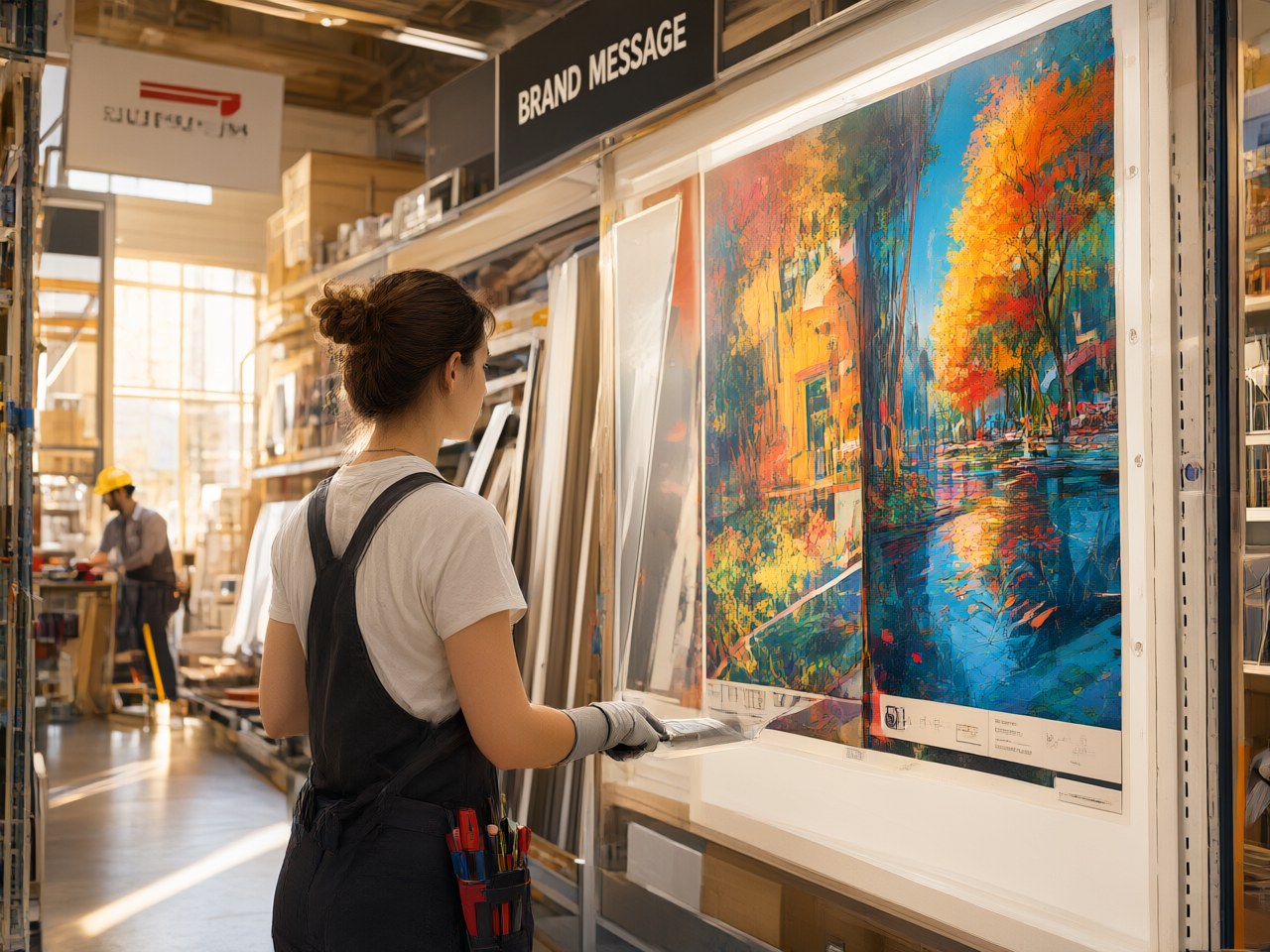
FreePost® Octopus™ shortens pop-up install and removal because it is dry-applied, can be lifted and re-laid, and comes off without residue. Those behaviors take out the rework and cleanup steps above. Easy install, easy remove, and no residual also mean store staff can hang and swap poster-size graphics themselves, without a professional crew.
On the shop floor, that means:
- Installation is a dry application. Octopus™ is specified for dry application. There is no wetting step, and no water to squeegee out afterward. - Positioning is forgiving. A panel that lands off-line can be peeled back and placed again. Application is described as bubble-free. - Store staff can do the install themselves. A non-specialist can hang a poster-size graphic, lift it if the alignment is wrong, and take it down at the end of the lease. - Teardown is fast. The film installs and removes quickly and leaves no residue on the venue surface, so there is no residue-cleaning step to book.
The surface still has to be suitable. A cleaner, smoother, and flatter surface gives more even contact. Octopus™ literature names smooth glass and metal as suitable surfaces. Easy removal does not mean the graphic is limited to a short campaign. FreePost® Octopus™, like the other FreePost® series, can hold for long-term indoor display. What changes versus a permanent film is the install and removal work, not whether the panel may stay up. No residual describes the surface after the film comes off. It is not a short-use-only claim, and it does not mean adhesive is left behind later.
Which micro-suction cling film model fits your printer and display surface
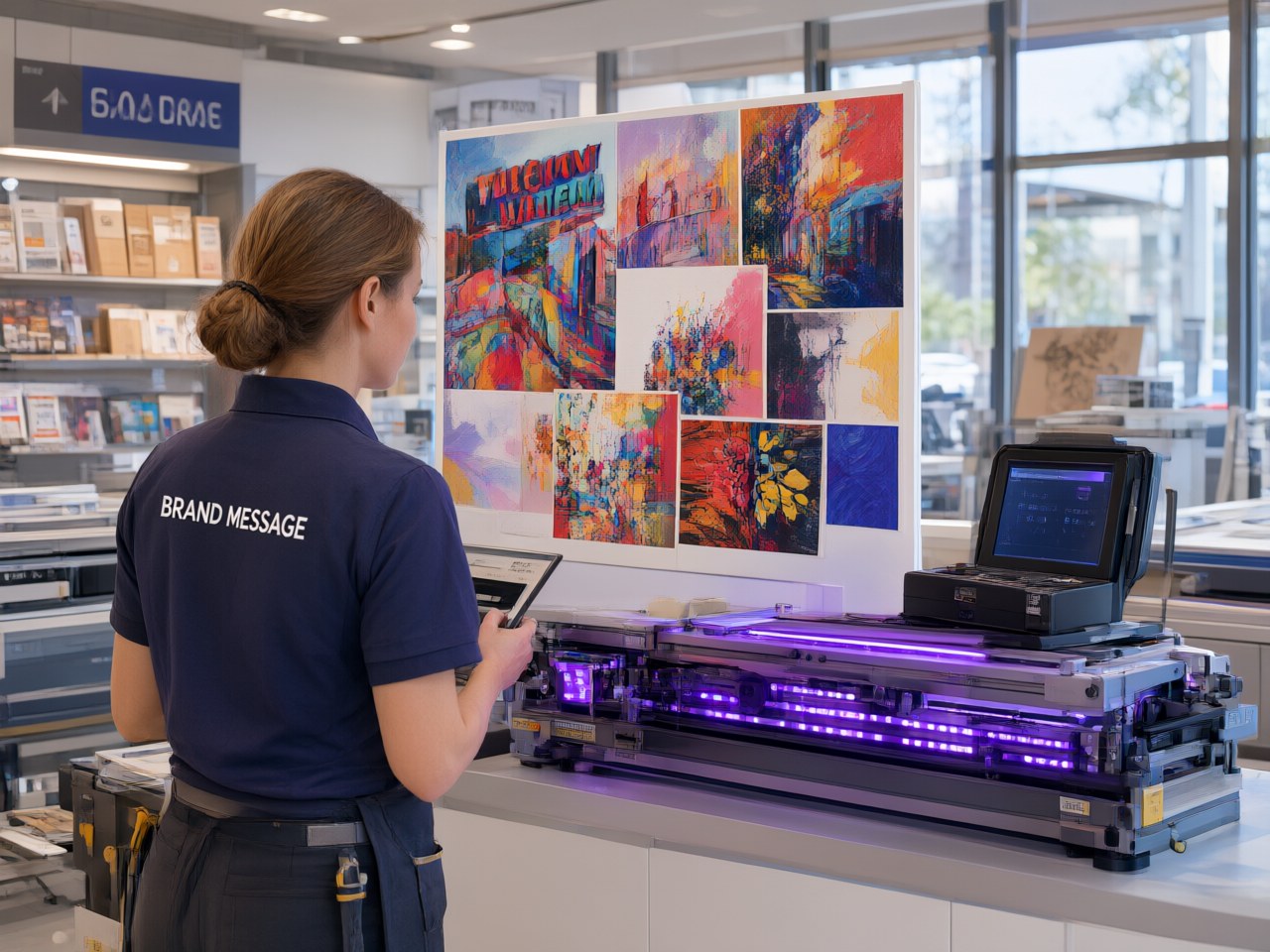
Choose the model by matching the print process first and the surface second. Printer compatibility differs between models in the same series, so confirm it model by model. Do not treat one model’s ink set as a series-wide claim.
| Model | Series | Face | Film thickness (μm) | Total thickness (μm) | Suitable surfaces | Indoor/outdoor | Compatible printing |
|---|---|---|---|---|---|---|---|
| OT-PP220DW | FreePost® Octopus™ | White PP, semi-gloss | ≈50 | 230±14 | Clean, smooth, flat glass and metal; not acrylic | Not listed | HP Indigo sheet-fed |
| OT-PP250EW | FreePost® Octopus™ | White PP, matt | ≈50 | 255±15 | Clean, smooth, flat glass and metal; not acrylic | Indoor | Eco-solvent, UV roll-to-roll, Latex, UV offset |
| OT-PP250EWB | FreePost® Octopus™ | White PP, matt, grey adhesive layer, 100% blockout | ≈50 | 255±15 | Clean, smooth, flat glass and metal; not acrylic | Not listed | Eco-solvent, UV roll-to-roll, Latex, UV offset |
| OT-PP260WW | FreePost® Octopus™ | White PP, matt | ≈50 | 310±18 | Clean, smooth, flat glass and metal; not acrylic | Indoor | Water-based dye and pigment ink |
| WL-PET140EC9 | FreePost® Wall Lizard™ | Clear PET, gloss | ≈50 | 190±12 | Glass, stainless steel, acrylic (series literature) | Not listed | Eco-solvent, Latex, UV roll-to-roll, UV offset, laser toner |
| EC-PET140EC7 | FreePost® Easy Cling™ | Clear PET, ultra-clear | ≈50 | 190±12 | Glass and smooth surfaces | Indoor | Eco-solvent, Latex, UV roll-to-roll |
Source: Scitop Ltd product data sheets for each listed model.
Notes on reading the table:
- Peel force. A merged 5–30 g/25mm band is not the peel strength of any single model in this table, so it is not listed as an Octopus™ series spec and it is not split by guesswork. Per-model peel figures are not stated in the sheets used here, so this article does not supply them. FreePost® Octopus™, FreePost® Easy Cling™, FreePost® Wall Lizard™, and FreePost® Spider™ can all hold firmly and can all be used long-term. The difference is the install and removal experience: easy install, easy remove, and no residual, including whether store staff can change a poster-size graphic themselves. Where FreePost® Spider™ is the higher-tack choice, that tack follows market demand and a lower cost. It is not a grade reserved for a longer run or a harsher site. These films come off without residual. Residue cleanup belongs to conventional permanent pressure-sensitive adhesive, not to these series. - Thickness in mil. Buyers who specify in mil can read the total thicknesses as about 7.5 mil for 190 μm, 9.1 mil for 230 μm, 10.0 mil for 255 μm, and 12.2 mil for 310 μm. The film layer of about 50 μm is about 2 mil. These are unit equivalents of the table, not a performance model.
Where the Octopus™ series stops and another series fits better:
- Octopus™ has no transparent version. All four models are white PP, not clear film. Only OT-PP250EWB is specified as 100% blockout. If a window graphic must be see-through, use a clear FreePost® Wall Lizard™ model such as WL-PET140EC9, or a clear FreePost® Easy Cling™ model such as EC-PET140EC7. Staff can still hang and later replace those poster-size panels without a specialist crew. Easy install, easy remove, and no residual apply to that swap as well. - Octopus™ is not for acrylic. The manufacturer advises against using Octopus™ on acrylic display boards. If a pop-up fixture is acrylic, Wall Lizard™ series literature lists acrylic among suitable surfaces. Do not extend that acrylic note to Octopus™ or to Easy Cling™, whose listed surfaces here are glass and other smooth surfaces. - Same series, different printers. OT-PP250EW and OT-PP260WW share a white matt PP face and an ≈50 μm film layer. They are not interchangeable at the printer. Scitop Ltd coats ink-receptive layers on its own coating and converting lines, and the coating is specified per model. OT-PP250EW is for eco-solvent, UV roll-to-roll, Latex, and UV offset; OT-PP260WW is for water-based dye and pigment inks. Order by the printer, not by appearance. OT-PP250EWB follows the OT-PP250EW print list and adds a grey adhesive layer and 100% blockout. What the installer can see is a cling film that dry-applies, can be lifted and re-laid, and comes off without residual on clean, smooth glass or metal. It is not a conventional permanent pressure-sensitive adhesive.
Estimate pop-up shop graphics installation labor from a timed pilot panel, not from a universal hour count
Calculate the saving by timing one pilot panel with each method, then scaling that time to the panel count. The table is a template. Every timing in it is an assumption for the worksheet, not a measured time study and not a factory labor rate. Replace each figure with your own.
Worksheet scenario: 12 panels of 1 m² each (about 10.8 ft² each, about 129 ft² in total).
| Labor step (replace with your times) | Conventional permanent adhesive film | FreePost® Octopus™ |
|---|---|---|
| Crew travel / call-out | 2 installers × 2 h = 4 person-hours | 0 (staff on site) |
| Install, 12 panels | 2 people × 15 min per panel = 6 person-hours | 1 person × 10 min per panel = 2 person-hours |
| Rework (assume 1 misplaced panel) | Reprint and reinstall, ~1 person-hour plus media | Lift and re-lay, a few minutes |
| Teardown and residue cleanup | 2 people × 15 min per panel = 6 person-hours | 1 person × 3 min per panel = 0.6 person-hours |
| Total (worksheet only) | ~17 person-hours | ~2.7 person-hours |
The structure of the comparison matters more than the totals. With Octopus™, the call-out, reprint, and residue-cleanup rows nearly disappear, because staff can dry-apply, reposition, and remove the graphic with no residual. The ~2.7 person-hour total is 2 hours of install plus 0.6 hours of teardown, with a few minutes allowed for one lift-and-relay. For a pop-up that changes graphics mid-run, the install and teardown rows repeat with every campaign swap, so the gap grows with each change. Repeating that work does not mean the film is only for a short hang. The same FreePost® Octopus™ panel can remain in place for long-term indoor display. Easy install, easy remove, and no residual are what cut the hours.
Practical tips:
- Cost per square meter. Divide the printed roll cost by the usable area after trim waste, then add the labor hours you actually saved, multiplied by your crew rate. Do not publish the worksheet hours above as your store’s result. - Shelf life. All four Octopus™ models list a one-year shelf life. Plan stock around the rollout calendar. WL-PET140EC9 lists a two-year shelf life, and EC-PET140EC7 lists a two-year shelf life. Do not copy the one-year figure onto those models. Shelf life is storage life before use. It is not a cap on how long a mounted graphic may stay up. - Operating temperature. The four Octopus™ models do not list a use temperature. Confirm that figure with the factory before installing an Octopus™ film in a hot window display. Do not invent an Octopus™ limit from indoor labeling, and do not copy another series onto it. WL-PET140EC9 lists -20~80. EC-PET140EC7 lists -30~130. - Sun-facing windows. For Octopus™, the manufacturer advises that the suction side should not face direct sunlight. Plan which way the graphic faces before printing. Keep that caution on Octopus™. Do not copy it onto Wall Lizard™ or Easy Cling™, and do not treat it as a reason to change series.
Common failure modes for micro-suction cling film and how to troubleshoot them
The notes below follow the manufacturer’s documented usage guidance where a series is named. Do not merge them into one rule for every FreePost® film. None of them means a panel is permanently ruined or cannot be put right.
- Poor hold after installation (Octopus™). The usual cause is a dirty surface or oil from hands on the cling side. The glass or metal needs to be clean, smooth, and flat. Handle panels by the edges. - Creases and wrinkles (FreePost® Octopus™ only). Factory guidance for Octopus™ is that creases and wrinkles affect how the product applies. Store and transport panels flat, without creases. This is an application-effect note for Octopus™ only. It is not the Easy Cling™, Wall Lizard™, or Spider™ note, and it is not an irreversible failure. - Wrinkles and curing (FreePost® Easy Cling™, FreePost® Wall Lizard™, and FreePost® Spider™). Factory guidance for those three series is that wrinkles and curing will affect cling persistence. Do not apply that wording to Octopus™, and do not rewrite the Octopus™ crease note as if it were this one. The condition is not a statement that those series cannot be used long-term, and it is not a finding that a creased panel has permanently failed. Avoid creases in storage and handling, and check the panel on the intended surface. - Panel on the wrong fixture (Octopus™). Check whether the fixture is acrylic. The manufacturer states Octopus™ is not for use on acrylic display boards. Move the graphic to glass or metal, or use a series whose literature lists acrylic, such as Wall Lizard™. Do not treat an acrylic trial as proof that the film has permanently failed. - Bubbles or poor contact after wetting. Octopus™ is specified for dry application. Do not wet-apply an Octopus™ panel, and do not copy a wet-application routine from another film onto Octopus™. Do not assume the Octopus™ dry-apply rule covers Wall Lizard™ or Easy Cling™. No extra tools are required for an Octopus™ dry apply on a clean surface.
Action checklist for switching your pop-up store to micro-suction cling film
1. List every graphic position and its surface. Glass and metal suit Octopus™. Acrylic does not. Any position that must be see-through needs a clear PET model from Wall Lizard™ or Easy Cling™, not an Octopus™ model; all four Octopus™ models are white PP, and only OT-PP250EWB is specified as 100% blockout. 2. Match the printer to a specific model: OT-PP220DW for HP Indigo sheet-fed; OT-PP250EW or OT-PP250EWB for eco-solvent, UV roll-to-roll, Latex, or UV offset; OT-PP260WW for water-based dye and pigment ink. Do not order “Octopus™” as if every model shared one ink set. 3. Choose OT-PP250EWB where the display needs 100% blockout. 4. Time one pilot panel for install, reposition, and removal with your own staff, then replace the worksheet labor table with those times. A poster-size panel should be something store staff can hang, lift, and remove on their own, with easy install, easy remove, and no residual. 5. Train staff on the Octopus™ rules that belong to Octopus™: clean the surface first, handle panels by the edges, dry-apply only, and keep creases from affecting how the panel applies. Keep the Easy Cling™ and Wall Lizard™ note separate: wrinkles and curing will affect cling persistence on those series. Do not teach one sentence as if it covered every FreePost® film. 6. Do not buy by a merged peel band, and do not treat a higher peel number as a longer campaign. Per-model peel is not stated in the sheets used here, so it is not filled in. Every FreePost® series can hold firmly for long-term use; choose Octopus™, Wall Lizard™, or Easy Cling™ by printer, surface, and how easily staff can install and remove the graphic. Octopus™ use temperature is not listed on the four models here; confirm that unlisted figure with the factory before a hot-window rollout. WL-PET140EC9 lists -20~80 and EC-PET140EC7 lists -30~130. Use each model’s own listed range, and do not replace those listed temperatures with a placeholder.
Ready to measure the hours on your own store? Visit https://www.scitop.net to book a free consultation. Scitop Ltd’s application engineering team can send FreePost® samples matched to your printer and surfaces, and can support multi-store pop-up rollouts through OEM/ODM, including custom slitting, packaging, and branding.
References
1. Scitop Ltd. Product data sheets: OT-PP220DW, OT-PP250EW, OT-PP250EWB, OT-PP260WW, WL-PET140EC9, EC-PET140EC7. https://www.scitop.net 2. Scitop Ltd. FreePost® Octopus™ product and technology pages. https://www.scitop.net